

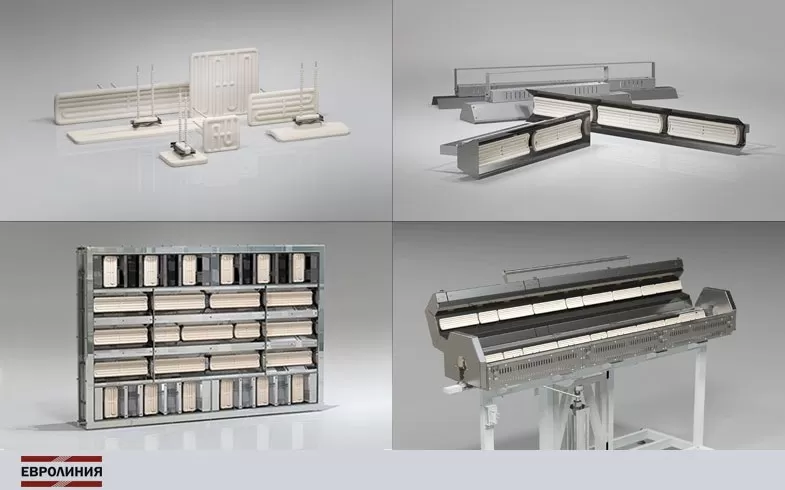
Описание конструкций инфракрасных обогревателей
Инфракрасные обогреватели рекомендуется использовать в качестве источника направленного лучистого тепла для местного локального обогрева рабочих мест и производственных зон в полуоткрытых и открытых помещениях, а также на открытом воздухе, где применение других видов отопления невозможно или малоэффективно.
Для оценки применения электрообогревателей различных типов в системах лучевого обогрева выделим из всего многообразия конструкций те, которые, на наш взгляд, наиболее применимы для направленного обогрева и отопления (см. таблицу 1). Ниже приведены результаты сравнительных испытаний данных обогревателей, полученные с применением характеристик и методик, представленных на странице нашего сайта «Характеристики инфракрасного излучения – инженерные приложения».
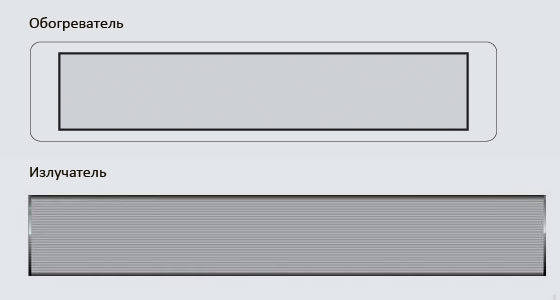
Панельные электрообогреватели (1) снабжены излучателем в виде с плоской алюминиевой пластины (профиля) в которую вмонтирован низкотемпературный металлический ТЭН. Такая поверхность излучения, как правило, анодирована и имеет нанесенную шероховатость с целью повышение коэффициента излучения (степени черноты). При качественной подготовке поверхности коэффициент излучения достигает значений ε1 = 0,75 -0,85. Температура поверхности излучения ограничена конструктивно максимумом до Tiz1 = 250 °C в целях пожарной безопасности, а также ввиду выраженного коробления алюминиевой пластины из-за разницы значений термического коэффициента линейного расширения (ТКЛР) пластины и ТЭНа.
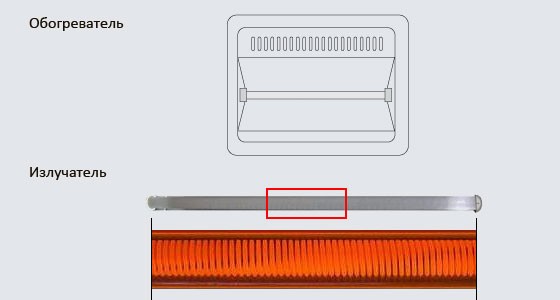
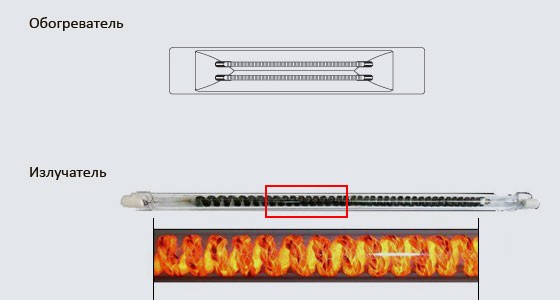
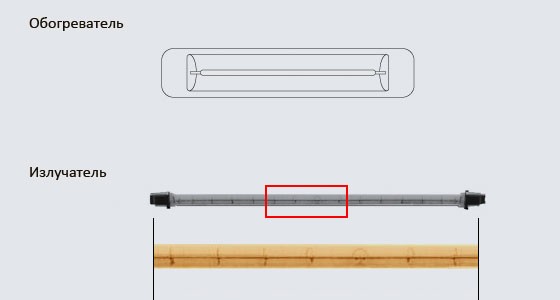
Кварцевые трубчатые электрообогреватели (2) имеют в качестве инфракрасного нагревательного элемента — излучателя кварцевую трубку диаметром от 8 до 25 мм внутри которой установлена электрическая проволочная спираль из резистивного сплава нихрома или фехраля. Спираль установлена таким образом, что ее витки касаются внутренней поверхности трубки. К тому же на внутреннюю поверхность трубки механически нанесена специальная штриховка, которая практически полностью предотвращает пропускание инфракрасных лучей через стенку трубки, только отражая и поглощая их. Сама трубка не герметична с концов и внутри ее находится воздух. Таким образом, разогретая спираль посредством контактной теплопроводности и теплового излучения разогревает изнутри кварцевую трубку и при этом наружная поверхность трубки является рабочим источником вторичного инфракрасного излучения. Коэффициент излучения наружной поверхности трубки сильно зависит от ее кривизны (диаметра): для трубки диаметром 8-11 мм измеренное значение ε1 = 0,61-0,65, для трубки диаметром 23-25 мм измеренное значение ε1 = 0,80 -0,85. В установившемся режиме разогрева температура наружной поверхности трубки (поверхности излучения) может составлять Tiz1 = 450-600 °C, что квалифицирует их как высокотемпературные. При этом имеет место свечение электрической спирали через матовую трубку красным светом, соответствующим температуре спирали 650-800°С.
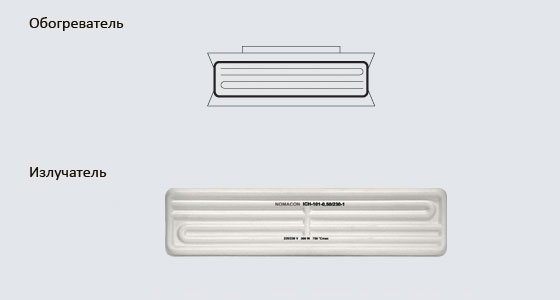
Электрообогреватели с керамическими инфракрасными нагревательными элементами (3) серии НОМАКОН ЭИУС-211, 212 и др. в качестве излучателя используют элементы с вогнутой излучающей поверхностью марки ИКН-101, имеющие электрическую мощностью 500 и 650 Вт. Их характеристики представлены на страницах излучателей и электрообогревателей нашего сайта. Обогреватели работают непосредственно в «темной» области спектра излучения, т.е. практически не светятся при температуре излучающей поверхности Tiz1 = 540-600°C и имеют по сравнению с другими типами излучателей наибольшее значение коэффициента излучения ε1 = 0,96.
Карбоновые электрообогреватели (4) имеют в качестве излучателя кварцевую инфракрасную карбоновую лампу (лампа марки ИКЛ и ее аналоги). Нагревательный излучающий элемент в карбоновой лампе изготовлен из тканной углеродной (карбоновой) нити, имеющую форму спирали. Карбоновая спираль запаяна в вакуумную колбу из прозрачного кварцевого стекла. По данным производителей карбоновых ламп источником теплового излучения является именно разогретая до Tiz1 = 750°C карбоновая спираль. При этом кварцевое стекло, обычно, оптическое специальной марки КИ (для инфракрасного излучения) по ГОСТ 15130 практически полностью пропускает лучистое тепло в диапазоне длин волн 0,75-4,0 мкм, т.е. полностью в коротковолновой (ближней IR-A 0,75-1,4 мкм) и средневолновой (средней IR-B 1,4-3,0 мкм) областях спектра инфракрасного излучения. Отмечено, что при значении коэффициента излучения разогретой карбоновой спирали ε1 = 0,75 — 0,77 коэффициент полезного действия карбоновой лампы, т.е. коэффициент эмиссии электрической энергии в энергию инфракрасного излучения достигает ηem1 = 90%. В отличие от кварцевых трубчатых излучателей карбоновые лампы светятся красным светом намного ярче.
Галогенные обогреватели (5) в качестве нагревательного элемента используют трубчатый кварцевый галогенный термоизлучатель (лампа марки КГТ и ее аналоги). Нагревательный излучающий элемент в галогенной лампе представляет собой спираль из вольфрамовой проволоки. Вольфрамовая спираль запаяна в колбу из прозрачного кварцевого стекла, заполненную газообразным галогеном. По данным производителей галогенных ламп источником теплового излучения является именно разогретая до цветовой температуры Tiz1 = 2000-2200°C вольфрамовая спираль. При этом оптическое кварцевое стекло полностью пропускает излучение в видимой области (световой диапазон), а также лучистое тепло в области длин волн 0,75-4,0 мкм, как и для карбоновых ламп. При значении коэффициента излучения вольфрамовой спирали при рабочей температуре ε1 = 0,30 — 0,32 коэффициент полезного действия галогенной лампы, рассчитанный для всей области спектра излучения, составляет не менее ηem1 = 90%. В отличие от кварцевых трубчатых и карбоновых обогревателей галогенные светятся ярким желтым светом.
Таблица 1. Конструкции инфракрасных электрообогревателей для испытаний
|
1. |
Панельный излучатель – плоская алюминиевая анодированная пластина размерами (длина х ширина) 1320х120 мм, отражателя нет |
 |
|
2. |
Кварцевый трубчатый излучатель – кварцевая трубка (длина х наружный диаметр) 320х11 мм, отражатель 320х100 мм |
|
|
3. |
Керамический излучатель ИКН-101-0,65/230-1, размеры излучающей поверхности в плане (длина х ширина) 245х65 мм, отражатель 255х100 мм |
|
|
4. |
Инфракрасная карбоновая лампа ИКЛ-0,35-3 установлено 2 шт. (длина зоны излучения х наружный диаметр колбы) 300х15 мм, отражатель 2 шт. 300х100 мм |
|
|
5. |
Инфракрасный галогенный термоизлучатель КГТ-220-600 (359, П 14/63), лампа размеры (длина зоны излучения х наружный диаметр колбы) 300х11 мм, отражатель 300х100 мм |
|
Обработка результатов испытаний
В ходе испытаний определяли потребляемую электрическую мощность Piz1, Вт в режиме номинального разогрева, температуру излучающей поверхности Tiz1, °C, а также коэффициент излучения (степень черноты) ε1 излучающей поверхности при температуре излучения. Площадь поверхности излучения Fiz1, см2 для излучателей 1-3 определяли, исходя из геометрических размеров излучателя. Для излучателей 4-5 (карбоновой и галогенной ламп) поверхность излучения спирали внутри колбы определяли расчетным путем на основании принятого от производителя значения лучевого КПД ηem1 = 90%. Например, на основании выражений 7 и 14 из раздела «Характеристики инфракрасного излучения – инженерные приложения» возможно записать

откуда формула для расчета поверхности излучения примет вид

Удельную поверхностную энергию излучения Eiz1, Вт/м2 рассчитывали по уравнению Стефана-Больцмана

где С0 = 5,671 Вт/(м2 ⋅ K4) — постоянная уравнения Стефана-Больцмана Tiz1, ° K — абсолютная температура излучающей поверхности в градусах Кельвина.
Длина волны максимума спектральной интенсивности излучения рассчитывалась по уравнению Вина

где b0 = 2,898 ⋅ 10-3 м⋅K — постоянная уравнения Вина.
Для построения графиков распределения удельной интенсивности излучения по длинам волн I = f(λ) использовали уравнение Планка

где C1 = 0,374⋅10-15 Вт⋅м 2, C2 = 1,4388⋅10-2 м⋅К — постоянные уравнения Планка.
Расчет доли удельной мощности излучения ηλ1, λ2 коротковолновой (ближней IR-A λ = 0,7 — 1,4 мкм ), средневолновой (средней IR-B λ = 1,4 — 3,0 мкм ), и длинноволновой (дальней IR-C λ = 3,0 — 80,0 мкм ) области спектра излучения осуществляли путем численного интегрирования уравнения Планка в заданном диапазоне длин волн от λ1 до λ2:


Коэффициент эмиссии электрической энергии в энергию инфракрасного излучения (лучевой КПД) определяли по формуле

Результаты испытаний и расчетные сравнительные характеристики излучателей представлены в таблице 2.
Таблица 2. Результаты испытаний и расчетные сравнительные характеристики излучателей
| Характеристики излучателя и обогревателя | Панельный излучатель (1) | Кварцевый трубчатый излучатель (2) | Керамический излучатель ИКН-101 (3) | Карбоновый излучатель ИКЛ-0,35-3 2 шт. (4) | Галоген-ный излу-чатель КГТ-220-600 (5) |
|---|---|---|---|---|---|
| Потребляемая электрическая мощность Piz1, Вт | 960 | 506 | 640 | 700 | 600 |
| Расчетная площадь излучающей поверхности Fiz1 , см2 | 1584,0 | 110,6 | 170,9 | 131,0 | 9,7 |
| Электрическая мощность на единицу площади излучающей поверхности Pud1 , Вт/см2 | 0,606 | 4,58 | 3,74 | 5,34 | 61,86 |
| Температура излучающей поверхности Tiz1, °C | 240 | 539 | 596 | 750 | 2100 |
| Коэффициент излучения (степень черноты) излучающей поверхности при рабочей температуре ε1 | 0,85 | 0,65 | 0,96 | 0,77 | 0,31 |
| Длина волны максимума спектральной интенсивности излучения λmax1, мкм | 5,65 | 3,57 | 3,33 | 2,83 | 1,22 |
| Удельная поверхностная энергия излучения Eiz1, Вт/см2 | 0,33 | 1,60 | 3,11 | 4,78 | 55,74 |
| Расчетная доля коротковолнового излучения IR-A ηA , % | 0,0 | 0,2 | 0,3 | 1,2 | 35,5 |
| Расчетная доля средневолнового излучения IR-B ηB , % | 1,7 | 15,5 | 19,3 | 29,3 | 50,2 |
| Расчетная доля длинноволнового излучения IR-C ηC , % | 98,3 | 84,3 | 80,4 | 69,5 | 14,3 |
| Коэффициент эмиссии электрической энергии в энергию инфракрасного излучения (лучевой КПД) ηem1 , % | 55,1 | 35,0 | 82,9 | 89,5 | 90,1 |
| Удельная энергия излучения, приведенная к площади отражателя обогревателя Eot1, Вт/см2 | 0,33 | 0,55 | 2,08 | 2,09 | 1,80 |
| Расчетный угол раскрытия лучевого потока на выходе из отражателя α1, град | 105 | 90 | 70 | 90 | 90 |
| Обеспечение оптимальной направленности лучевого потока, угол наклона отражателя к горизонту β1, град | Низкое β1 = 90° |
Среднее β1 = 0-45° |
Высокое β1 = 0-90° |
Среднее β1 = 0-45° |
Среднее β1 = 1-45° |
| Световое воздействие излучателей по яркости свечения | — | Среднее | Низкое | Среднее | Высокое |
| Вероятность возникновения психофизиологической непереносимости длительного лучевого обогрева | Низкая | Средняя | Низкая | Высокая | Высокая |
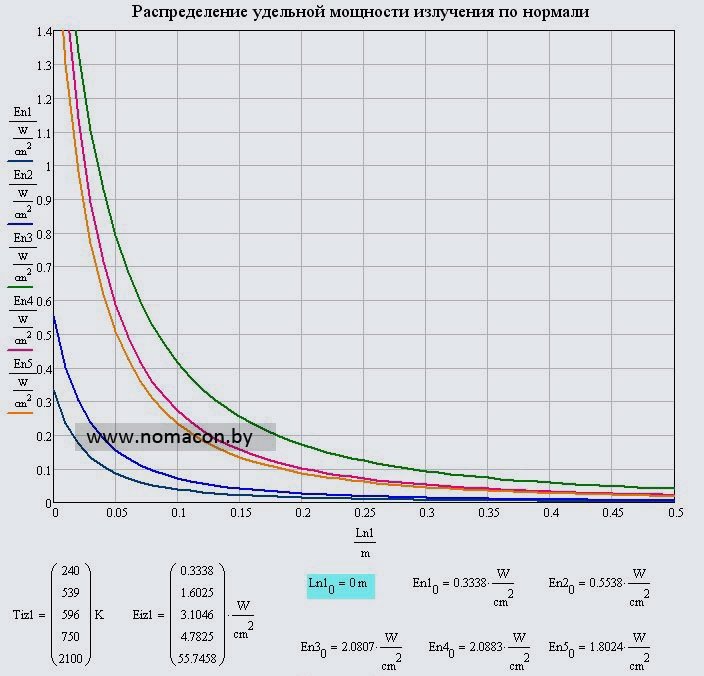
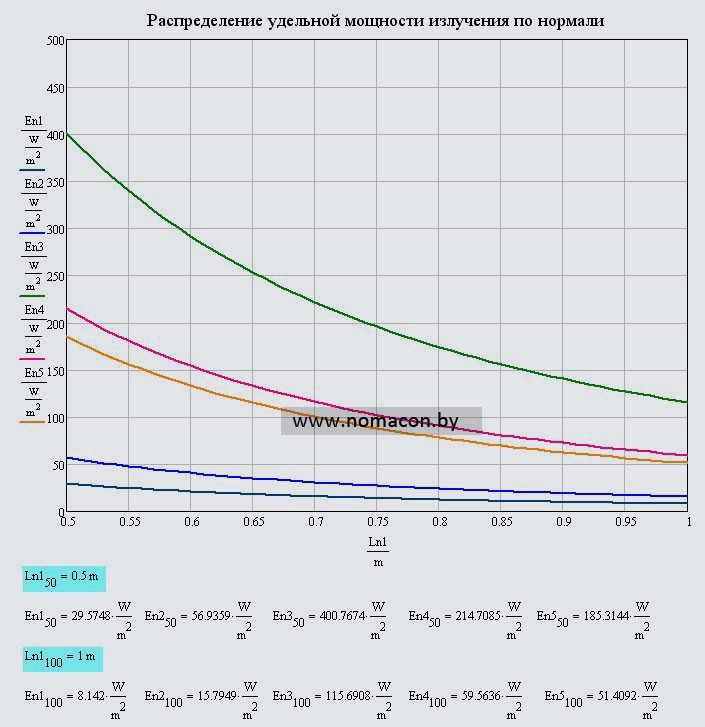
Для оценки значений удельной мощности инфракрасного излучения на различном расстоянии от излучающей поверхности по направлению нормали к данной поверхности En1 = f (Ln1), Вт/м2 при направленном лучевом обогреве использовали закон обратных квадратов для электромагнитного излучения

де Eot1, Вт/м2 — удельная энергия излучения, приведенная к площади рефлектора-отражателя обогревателя;
Ln1, м — текущее значение расстояния от поверхности излучения по нормали к данной поверхности;
α1, град — объемный угол раскрытия лучевого потока на выходе из рефлектора-отражателя;
R1, м — приведенный радиус лучевого потока на выходе из отражателя.
Если принять размеры рефлектора-отражателя в плане: длина Lot1, м и ширина Bot1, м, то выражения для расчета Eot1 и R1 примут вид:

Для панельного излучателя 1, не имеющего отражателя, принимали Eot1 = Eiz1, a Bot1 равняется ширине панели-излучателя. Угол раскрытия лучевого потока на выходе из рефлектора-отражателя α1 определяется конструкцией излучателя и отражателя к нему. Для панельных обогревателей 1 многими производителями указывается различные значения в пределах α1 = 90-120°. Для расчетов принимали наиболее вероятное среднее значение α1 = 105°. Для отражателей трубчатых кварцевых 2, карбоновых 4 и галогенных 5 обогревателей значение α1 составляет, как правило, не менее 90°. В боковой проекции обогревателя трубка или лампа излучателя представляет собой точечный источник излучения, который расположен на определенном расстоянии (в фокусе) hot1, м от задней поверхности отражателя глубиной Hot1, м. В данном случае выражение для расчета α1 примет вид

Для принятых при испытаниях значениях Bot1 = 100 мм, Hot1 = 70 мм и hot1 = 20 мм расчет по формуле (12) дает значение α1 = 90°. Для обогревателей с керамическими излучателями значение α1 определялось экспериментальным путем (см. раздел «Характеристики инфракрасного излучения – инженерные приложения») и составило α1 = 68-72°.
Сравнительный анализ характеристик инфракрасного излучения
Электрообогреватели для испытаний были подобраны таким образом, чтобы их потребляемая электрическая мощность была одного порядка и различалась незначительно. При этом за счет существенно отличающейся расчетной площади излучающей поверхности и возможности ее эффективного разогрева (имеется ввиду различный принцип действия излучателей, описанный выше) мы имеем минимальное значение потребляемой электрической мощности на единицу излучающей поверхности у панельного излучателя 1 и, как следствие, невысокую температуру излучающей поверхности. А так как удельная энергия излучения согласно формуле (3) зависит от температуры излучающей поверхности в четвертой степени, то даже при достаточно высоком значении коэффициента излучения величина удельной энергии излучения панели будет гораздо ниже, чем у других излучателей. Из-за этого, например, для панельного излучателя 1 теоретически невозможно получить высокие значения лучевого КПД, определяющего эффективность обогревателя именно как инфракрасного.
У кварцевого трубчатого излучателя 2 потребляемая электрическая мощность на единицу поверхности излучения является достаточно высокой, выше, например, чем у керамического излучателя 3, но при этом температура излучающей поверхности (наружная поверхность трубки) несколько ниже, чем у керамического. Это объясняется конструктивными особенностями трубчатого обогревателя, в котором разогретая до высокой температуры трубка по своему периметру снизу вверх омывается потоками холодного окружающего воздуха, т.е. наружная излучающая поверхность трубки никак не защищена от тепловых конвекционных потерь по сравнению, например, с керамическим излучателем, тыльная часть которого прикрыта отражателем и корпусом обогревателя. Как отмечалось выше, коэффициент излучения наружной поверхности трубки сильно зависит от ее кривизны (диаметра): при диаметре трубки 11 мм он существенно ниже, чем у панельного и керамического излучателя. Полученные низкие значения удельной поверхностной энергии излучения и лучевого КПД являются характерными для данного типа обогревателя. Для сравнения были проведены испытания кварцевого трубчатого обогревателя с размерами трубки (длина х наружный диаметр) 420х23,2 мм, который в режиме номинального разогрева имел потребляемую электрическую мощность Piz1 = 1477 Вт, удельную электрическую мощность Pud1 = 4,4 Вт/см2, температуру излучающей поверхности Tiz1 = 462°C при значении коэффициента излучения ε1 = 0,85. . В данном случае существенное снижение температуры излучающей поверхности из-за тепловых потерь не компенсируется ростом значения коэффициента излучения от увеличения диаметра трубки. Рассчитанное значение лучевого КПД составило ηem1 = 31,9%.
Сравнительная оценка физиологического воздействия на организм человека
С помощью системы направленного лучевого обогрева в рабочей зоне помещения должна быть создана благоприятная для человека тепловая обстановка. На станице сайта «Инфракрасный обогрев тела человека – нормативы и обеспечение микроклимата производственных помещений» и в [3] нами представлены методики, которые позволяют на основе действующих нормативных документов определить уровни удельной мощности теплового излучения для зоны с повышенной интенсивностью облучения, для зоны эффективного обогрева, а также для зоны комфортного, но недостаточного обогрева. Следует отметить, что существующие нормативы отражают лишь одну из количественных характеристик обогрева, а именно, значение удельной мощности излучения, которая, в принципе, может быть обеспечена применением любой конструкции инфракрасного обогревателя.
Практика проектирования и эксплуатации систем локального лучевого обогрева, а также опыт разработки, испытаний и сертификации специальных устройств обогрева человека направленным инфракрасным излучением [3-4] показывает,
что при выборе конструкции обогревателя должны быть соблюдены дополнительные требования, позволяющие минимизировать последствия, связанные с так называемой психофизиологической непереносимостью работниками длительного воздействия направленного лучевого обогрева.
Основными физическими факторами воздействия на организм человека в данном случае являются:
- повышенное избирательное действие излучения на различные части тела и, особенно, на голову человека, связанное с невозможностью обеспечить заданную оптимальную направленность лучевого потока;
- наличие в спектре излучения высокой доли «жесткого» коротковолнового и средневолнового излучения;
- направленное световое воздействие «светящихся» излучателей.
Обеспечение оптимальной направленности лучевого потока определяется возможностью установки обогревателя, как на потолке (на подвесе) с направлением отражателя вертикально вниз (угол наклона к горизонту β1 = 90°, так и наличием специального крепления для фронтальной установки обогревателя на стену с возможностью изменения угла наклона отражателя от β1 = 0° (отражатель установлен горизонтально) до β1 = 60° и более относительно горизонтальной оси. К тому же, при большом значении угла раскрытия лучевого потока α1 уже при незначительном расстоянии до обогревателя размер «горячего пятна» заданной удельной мощности обогрева становится большим и как бы накрывает человека полностью с головой, создавая ощущение дискомфорта на более чувствительной коже лица и головы. Меньшее значение α1 в сочетании с широким диапазоном изменения β1 позволяет обогревателям направленно работать с большего расстояния и формировать «горячее пятно» в рабочей зоне ниже головы работника.
Панельные обогреватели 1 имеют, как правило, потолочное крепление β1 = 90° при максимальном значении угла раскрытия лучевого потока α1. При этом их возможности создавать тепловой поток оптимальной направленности наиболее ограничены. Кварцевые трубчатые 2, карбоновые 4 и галогенные 5 обогреватели настенного исполнения обычно имеют ограничение угла наклона к горизонту не более β1 = 45°, что связано с возможным перегревом корпуса разогретым до высокой температуры воздухом, исходящим от излучателя. При этом они имеют средние значения α1. Керамические обогреватели 3 в конструктивном исполнении ЭИУС-211,ЭИУС-212 и т.п. имеют универсальное крепление на потолок и стену β1 = 0-90° при минимальном значении α1.
Физиологическое воздействие «жесткого» коротковолнового и средневолнового излучения на организм человека определяется его проникающей способностью в слои кожи и ткани. В ближнем диапазоне инфракрасного излучения IR-A [5] на длине волны λ = 0,95мкм проникающая способность достигает максимума и составляет 60-70 мм [5] (см. Рисунок 5). В среднем диапазоне IR-B проникающая способность снижается до 20-30 мм, а в дальнем IR-C составляет не более 0,3-0,5 мм. Учитывая физиологические особенности человека, современная медицина характеризует эти области спектра следующим образом: длина волны 0,75-1,4 мкм – излучение, проникающее в глубь кожи человека (диапазон IR-A); длина волны 1,4-3 мкм — излучение, поглощаемое эпидермисом и соединительно-тканным слоем кожи (диапазон IR-B); длина волны более 3 мкм – излучение, поглощаемое на поверхности кожи (диапазон IR-C). При этом наибольшее проникновение наблюдается в диапазоне от 0,75 до 3 мкм и этот диапазон называется «окном терапевтической прозрачности» [6]. Согласно [7] интенсивность излучения от экранов телевизоров, видеомониторов, осциллографов, измерительных и других приборов и средств отображения информации с визуальным контролем не должна превышать 0,05 Вт/м2 в ближнем ИК диапазоне (0,76—1,050 мкм) и 4 Вт/м2 в дальнем (свыше 1,050 мкм) ИК диапазоне. При этом допустимый уровень интенсивности интегрального потока инфракрасного излучения от электроприборов мягкой теплоты и излучателей на поверхности тела человека не должен превышать 100 Вт/м2. Таким образом, подтверждается небезопасность именно коротковолнового излучения.
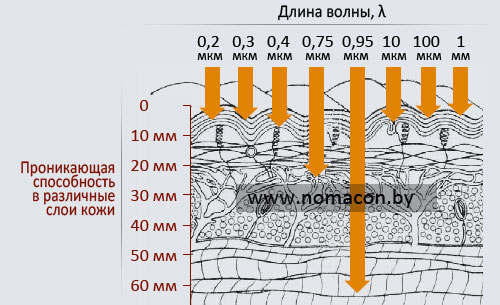
Следует отметить, что физиологическое воздействие инфракрасного излучения, связанное с его проникновением вглубь тела человека, недостаточно изучено даже на уровне кратковременных терапевтических процедур. С этой точки зрения для обеспечения полной безопасности работника при длительном воздействии лучевого обогрева необходимо максимально ограничить диапазон «терапевтической прозрачности» в спектре интенсивности лучевого потока от обогревателя. Проведенные исследования при сертификации разработанных нами пеленальных столиков для новорожденных с направленным инфракрасным обогревом [4] показали, что безопасным по физиологическому воздействию следует считать «мягкое» длинноволновое излучение IR-C с долей коротковолнового излучения IR-A по удельной мощности не более ηA = 0,5% и с долей средневолнового излучения IR-B не более ηB = 20%. Опыты по облучению чувствительной части тела – тыльной поверхности руки человека «мягким» излучением керамического нагревателя и «жестким» излучением галогенного нагревателя показали, что «мягкое» излучение человек начинает непосредственно чувствовать при большей удельной мощности лучевого потока (примерно на 20-30%), чем «жесткое». Это объясняется тем, что «мягкое излучение» гораздо меньше проникает вглубь кожи и меньше раздражает подкожные рецепторы по сравнению с «жестким» излучением. Таким образом, переносимость человеком обогрева с «мягким» нормированным излучением будет всегда выше. По результатам представленных испытаний критерию безопасности физиологического воздействия на человека при длительном направленном обогреве в полной мере соответствуют длинноволновые обогреватели: панельные 1, кварцевые трубчатые 2 и керамические 3 (см. таблицу 2). Доли коротковолнового и средневолнового излучения карбоновых 4 и галогенных 5 обогревателей данному критерию не соответствуют.
Направленное световое воздействие излучателей при локальном лучевом обогреве проявляется в случае фронтального расположения обогревателя непосредственно перед работником, когда выраженное свечение излучателей и освещенный ими рефлектор-отражатель постоянно попадают в поле зрения работника, раздражая и отвлекая от производственного процесса. При обогреве в ночное время световое воздействие создает наведенную освещенность помещения, что мешает спокойному засыпанию и нормальному протеканию процесса сна.
По показателю светового воздействия панельные обогреватели 1 находятся вне конкуренции, т.к. свечение излучателя у них полностью отсутствует. Свечение керамических излучателей 3 при нормальном искусственном или естественном освещении в помещении практически не заметно и начинает несколько проявляться только при существенном затемнении помещения и в полной темноте. В данном случае речь может идти о низком уровне светового воздействия. Средний уровень светового воздействия кварцевых трубчатых 2 и карбоновых 4 излучателей определяется рабочей температурой спирали, равной 650-800 °С. Наиболее высокий сравнительный уровень светового воздействия имеет галогенный излучатель 5 с рабочей температурой спирали 2000-2200 °С.
Критерии выбора обогревателей для направленного лучевого обогрева
Приведенные выше результаты испытаний показывают, что любые типы инфракрасных обогревателей возможно сравнить, как минимум, по 16-ти параметрам, которые определяют их конструктивные особенности и режимы работы непосредственно инфракрасных излучателей, спектральные характеристики генерируемого излучения и лучевой КПД, особенности направленного распределения лучистого тепла в пространстве, а также условия безопасности физиологического воздействия на организм человека.
Для того чтобы разобраться, где и как эффективнее применять инфракрасные обогреватели различных типов, необходимо определиться в базовых понятиях:
- Инфракрасный обогрев – это процесс использования нагревательных устройств – обогревателей с целью быстрого локального направленного обогрева человека, животных, окружающих предметов и материалов в закрытых, полуоткрытых и открытых помещениях, а также на открытом воздухе;
- Инфракрасное отопление – это процесс использования нагревательных устройств — отопителей с целью длительного поддержания желаемой температуры воздуха в закрытом помещении.
Таким образом, представленные выше устройства инфракрасного нагрева могут применяться и в качестве обогревателей, и в качестве отопителей, и в качестве систем дополнительного отопления.
В процессе инфракрасного отопления помещения, если там постоянно не находятся люди, важно общее количество электрической энергии, потребляемое отопителем и генерируемое затем в объеме помещения в виде теплового излучения и конвекционного тепла горячего воздуха, разогретого теплоотдачей от излучателей и корпуса отопителя.
Это общее количество энергии и призвано компенсировать внешние потери тепла через стены и окна для поддержания заданной температуры воздуха в помещении. Критерии выбора по представленным в таблице 2 характеристикам в данном случае несколько нивелируются, так как, например, параметры излучателей, характеристики излучения и даже лучевой КПД не влияют на общее количество выделившейся энергии, зависящей только от потребляемой электрической мощности отопителя.
В процессе инфракрасного обогрева обогреватель должен обеспечить направленный лучевой поток на предмет разогрева – работника таким образом, чтобы на заданном расстоянии от обогревателя были обеспечены необходимая нормируемая удельная мощность излучения, а также размеры и расположение области обогрева, определяющие условия комфортной тепловой обстановки в данной зоне помещения, или на открытом воздухе.
В данном случае сравнительные характеристики таблицы 2 дают исчерпывающую информацию по недостаткам и преимуществам каждого типа обогревателя. В таблице красным цветом выделены сравнительные значения характеристик, неудовлетворяющие, на наш взгляд, требованиям направленного лучевого обогрева.
Панельный обогреватель 1 имеет минимальное значение потребляемой электрической мощности на единицу излучающей поверхности и, как следствие, низкие значения температуры излучающей поверхности и удельной поверхностной энергии излучения. Невысокий лучевой КПД в совокупности с высоким углом раскрытия лучевого потока не позволяют получить достаточную удельную мощность лучевого обогрева на расстоянии более 1 м от обогревателя. При создании зоны комфортного обогрева потребление электроэнергии будет практически в 2 раза больше, чем у наиболее эффективного обогревателя.
Кварцевый трубчатый обогреватель 2 из-за низкого значения коэффициента излучения трубки не может обеспечить приемлемый лучевой КПД и удельную энергию излучения, приведенную к площади отражателя. К тому же, при близком нахождении перед предметом обогрева за счет дополнительного светового воздействия излучателей возникает вероятность непереносимости длительного лучевого воздействия на работника.
Проблема применения карбонового 4 и галогенного 5 обогревателей для направленного лучевого обогрева человека заключается в повышенной температуре излучателей и по этой причине наличии повышенных уровней коротковолнового и средневолнового излучения. В сочетании с повышенным световым воздействием излучателей в данном случае имеем высокую вероятность непереносимости длительного лучевого воздействия на работника.
Характеристики обогревателя с керамическими излучателями 3 по режиму инфракрасного обогрева находятся именно в рамках допустимых величин коротковолнового и средневолнового излучения. При этом обеспечиваются значения лучевого КПД и удельной энергии излучения на единицу площади отражателя, сопоставимые со значениями для карбонового и галогенного обогревателей. Неоспоримым преимуществом обогревателя с керамическими излучателями конструкции ЭИУС-211, ЭИУС-212 является возможность обеспечения максимального диапазона изменения угла наклона отражателя к горизонту при минимальном значении угла раскрытия лучевого потока и практическом отсутствии светового воздействия излучателей при фронтальном обогреве человека.
Таким образом, обогреватель позволяет наиболее эффективно создавать достаточную удельную мощность лучевого обогрева на расстоянии более 1 м от излучающей поверхности при минимальном потреблении электроэнергии.
Наряду с характеристиками, определяющими физический процесс инфракрасного обогрева (см. таблицу 2), при выборе конструкции обогревателя следует учитывать так же его эксплуатационные характеристики в условиях производства, наиболее значимыми из которых являются:
- климатическое исполнение;
- срок службы излучателя и обогревателя;
- устойчивость к перепаду температур, повышенной влажности и выпадению конденсата, воздействию осаждаемой пыли и копоти, влиянию коррозионно-активных и химически активных веществ в воздухе рабочей зоны;
- возможность установки на объектах, движущихся с ускорением и торможением, устойчивость к воздействию вибрационных нагрузок.
Следует отметить, что кварцевые трубки и лампы весьма чувствительны к поверхностному загрязнению – к лампам КГТ даже нельзя дотрагиваться руками. Появление пылевого загрязнения поверхности кварцевой колбы или ее закопченности ведет к перегреву излучающей спирали и быстрому выходу лампы из строя. Соответственно, кварцевые трубки и колбы не переносят наличие конденсата на поверхности при включении. Поэтому подавляющее большинство панельных, кварцевых трубчатых, карбоновых и галогенных обогревателей имеют климатическое исполнение УХЛ4 по ГОСТ 15150: эксплуатация в закрытых отапливаемых помещениях при температуре воздуха от +1 до +40°С, наличии вентиляции и отсутствии песка, пыли и конденсации влаги из наружного воздуха. У керамических излучателей покрытие излучающей поверхности выполнено ангобированной керамической глазурью на основе оксида циркония, которая, в отличие от кварцевых трубок и ламп, абсолютно не чувствительна к пыли и органическим загрязнениям, которые выжигаются и удаляются с поверхности щеткой. Глазурь не чувствительна к повышенной влажности и конденсату на поверхности при включении, наличию химических соединений в воздушной среде рабочей зоны. С применением керамических излучателей возможно изготовление обогревателей, имеющих климатическое исполнение УХЛ2 (эксплуатация на открытом воздухе под навесом) и УХЛ5 (эксплуатация в помещениях с повышенной влажностью – шахтах, подвалах с частой конденсацией влаги на стенах и потолке).
Одним из условий эксплуатации кварцевых трубчатых излучателей, карбоновых и галогенных ламп является их неподвижное горизонтальное положение при включении и обогреве. При повороте лампы, например, в вертикальное положение распределение разогретой спирали внутри колбы может быть нарушено из-за пониженных механических свойств материала спирали. То же самое может произойти при движении лампы с ускорением, резком повороте в горизонтальной плоскости или при возникновении вибрационных нагрузок. У керамических излучателей греющая спираль залита керамической массой и по этой причине все вышеперечисленные факторы движения не влияют на работоспособность обогревателя.
Таким образом, представленные в работе результаты испытаний, сравнительная оценка характеристик излучателей, а также анализ критериев выбора различных типов обогревателей показывают, что наиболее перспективными для направленного лучевого обогрева в производственных условиях являются обогреватели с керамическими инфракрасными излучателями.
Литература:
1. Рабко А.Е. Инфракрасные керамические излучатели и электрообогреватели НОМАКОН/ А.Е. Рабко, И.Л.Козловский, П.П. Першукевич, М.В. Бельков // Электроника инфо. — 2011. — №5. — С.26-29.
2. Рабко А.Е. Промышленный инфракрасный обогрев ИК-электрообогревателями НОМАКОН / А.Е. Рабко, И.Л. Козловский, Ю.Н. Жилинский, А.Г. Пацевич // Электроника инфо. — 2012. — №4. — С.89-92.
3. Рабко А.Е. Отопление помещений инфракрасными электрообогревателями НОМАКОН / А.Е. Рабко, И.Л. Козловский, В.А. Орсич // Электроника инфо. — 2013. — №9. — С.45-48.
4. Демченко А.И. Mногофункциональная ИК-система обеспечения термонетрального окружения для новорожденных детей/ А.И. Демченко, А.В. Безъязычная, В.В. Безъязычная, И.Л. Козловский, А.Е. Рабко, А.Г. Пацевич // Сб. трудов 22-й Международной конференции «СВЧ-техника и телекоммуникационные технологии». — 2012, Севастополь. — С.989-990.
5. Пономаренко Г.Н., Турковский И.И. Биофизические основы физиотерапии. — М.: ОАО «Издательство «Медицина». — 2006. – 176 С.: ил.
6. Henderson R. Wavelength considerations. Instituts für Umform- und Hochleistungs, 2007.
7. СанПиН № 9-29-95 (Р.Ф. № 2.1.8.042-96) Санитарные нормы допустимых уровней физических факторов при применении товаров народного потребления в бытовых условиях.
 English
  Русский